
Citizen Science
What is citizen science?
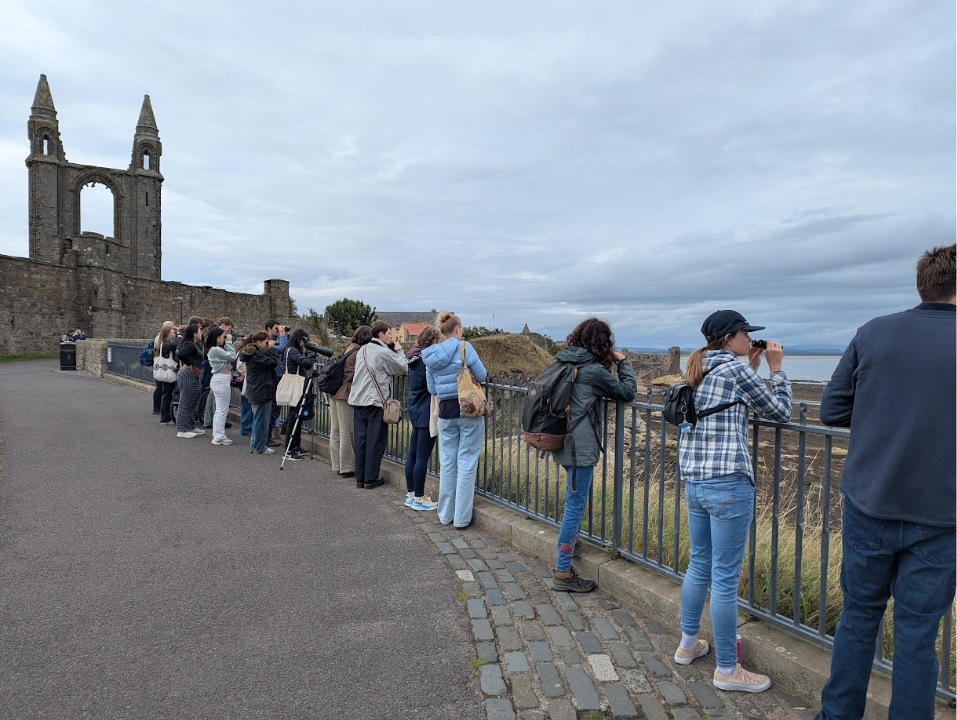
Citizen science is scientific research carried out with the participation of the public. In ecology, it usually involves members of the public submitting data on species and habitats to a central database. The resulting databases have a wider scope, both geographically and of species covered, than is possible in surveys carried out by professionals.
Citizen science projects provide huge quantities of valuable data; however, they also present challenges to the statistician because the data they generate can be subject to a range of biases. These biases can arise from the sites chosen by observers, the expertise of the observers, the difficulty of identifying species, etc. Sophisticated modelling methods are usually needed to unlock the huge potential of citizen science databases.
What has CREEM contributed?
Most of CREEM’s contributions to citizen science research have been related to the development of robust population models incorporating a range of citizen science datasets. Many of these models have been produced in close collaboration with external research and conservation organisations, including the British Trust for Ornithology and the Cornell Lab of Ornithology. The outputs and inferences from these models have been used to directly inform conservation policy and management decisions at a range of spatial, temporal, and taxonomic scales.
What species are these methods used for?
Citizen science can be used to support scientific research across all of biodiversity. Many citizen science projects are holistic in nature and allow observers to record data on a range of species. For example, iNaturalist [link] collects photo and audio observations of any species whatsoever, whereas projects like eBird [link] and BirdTrack [link] primarily collect observations of birds. Other projects are much narrower in scope: for example, Snapshot Serengeti [link] allows citizen scientists to classify camera-trap images from across the Serengeti.
Who in CREEM works on these methods?
- Ali Johnston
- Hannah Worthington
- Ben Swallow
- Fergus Chadwick
- Steve Buckland – Emeritus Professor
PhD Students: Louis Backstrom, Rachel Drake, Jiayi Liu, Duncan MacDougall
A few relevant publications by CREEM staff
Johnston, A., Rodewald, A.D., Strimas-Mackey, M., Auer, T., Hochachka, W.M., Stillman, A. N., … & Fink, D. (2025). North American bird declines are greatest where species are most abundant. Science, 388(6746), 532-537.
Backstrom, L.J., Callaghan, C.T., Worthington, H., Fuller, R.A. & Johnston, A. (2025). Estimating sampling biases in citizen science datasets. Ibis, 167: 73-87.
Summers, R.W., Swallow, B., Fridman, J., Hokkanen, T., Newton, I. and Buckland, S.T. (2024), Irruptions of crossbills Loxia spp. in northern Europe – patterns and correlations with seed production by key and non-key conifers. Ibis, 166: 1172-1183.
Chadwick, F. J., Haydon, D. T., Husmeier, D., Ovaskainen, O., & Matthiopoulos, J. (2024). LIES of omission: complex observation processes in ecology. Trends in Ecology & Evolution, 39(4), 368-380.
Johnston, A., Matechou, E., & Dennis, E. B. (2023). Outstanding challenges and future directions for biodiversity monitoring using citizen science data. Methods in Ecology and Evolution, 14(1), 103-116.
Johnston, A., Hochachka, W.M., Strimas‐Mackey, M.E., Ruiz Gutierrez, V., Robinson, O.J., Miller, E.T., … & Fink, D. (2021). Analytical guidelines to increase the value of community science data: An example using eBird data to estimate species distributions. Diversity and Distributions, 27(7), 1265-1277.
Buckland, S.T., Yuan, Y., & Marcon, E. (2017). Measuring temporal trends in biodiversity. Advances in Statistical Analysis, 101(4), 461-474.
Swallow, B., Buckland, S.T., King, R., & Toms, M.P. (2016). Bayesian hierarchical modelling of continuous non‐negative longitudinal data with a spike at zero: An application to a study of birds visiting gardens in winter. Biometrical Journal, 58(2), 357-371.
Harrison, P.J., Buckland, S.T., Yuan, Y., Elston, D.A., Brewer, M.J., Johnston, A., & Pearce‐Higgins, J. W. (2014). Assessing trends in biodiversity over space and time using the example of British breeding birds. Journal of Applied Ecology, 51(6), 1650-1660.
Some relevant links